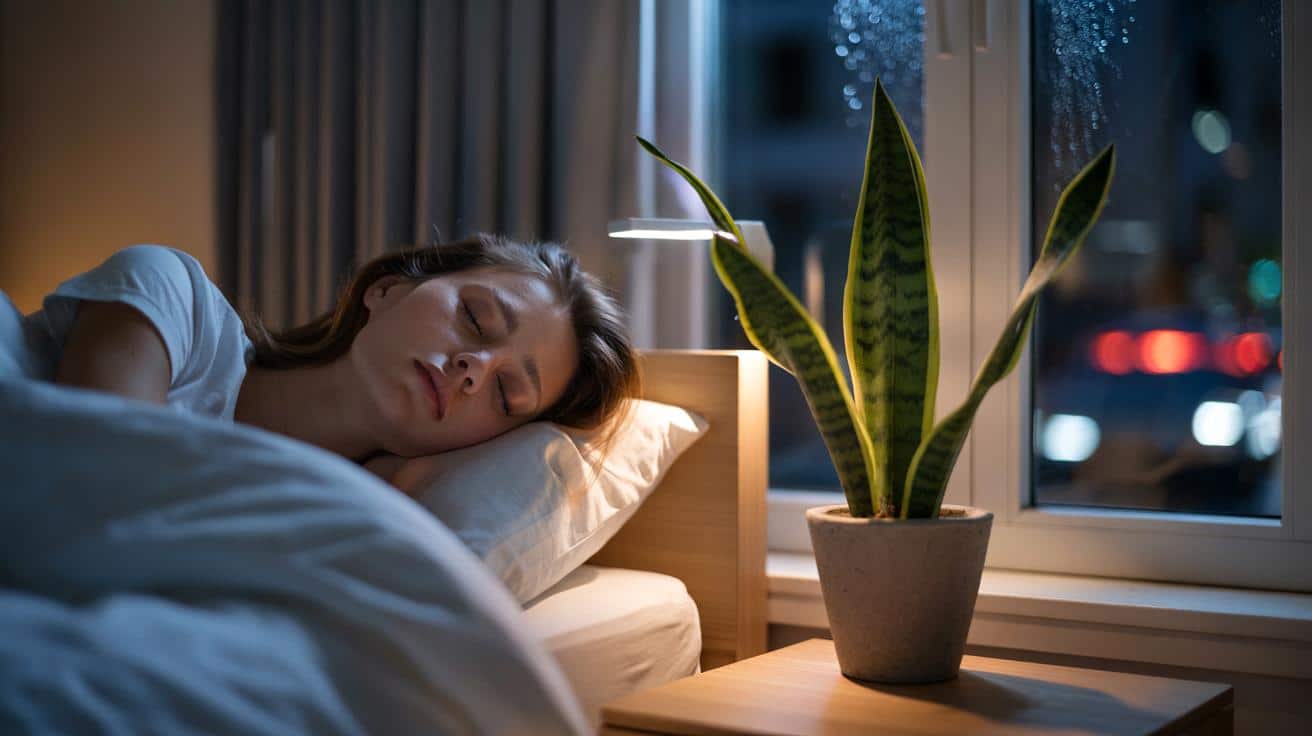
At 2:47 a.m., the city outside her window was a faint hum of traffic and distant sirens. Inside, Marie lay wide awake, staring at the ceiling, replaying the same to-do list she’d mentally revised twelve times already. Her phone glowed on the nightstand, accusing and irresistible. She grabbed it, scrolled, sighed, turned again.
That’s when her eyes landed on something else on the nightstand. A small, stubbornly green plant, its leaves stretching quietly toward the darkness. It had been a gift, more decoration than priority. Yet lately, she had the strange feeling that on nights when the window was slightly open and the room felt fresher, she slept differently. Deeper.
Weeks later, she stumbled on a NASA reference that made her freeze mid-scroll.
Maybe this little plant wasn’t just a pretty accessory.
The bedroom plant NASA quietly put on the map
We’ve all walked into a stuffy bedroom and felt that almost invisible weight in the air. The faint smell of laundry, dust, maybe a hint of deodorant and old perfume. You don’t see it, but your body feels it.
NASA’s now-famous research on indoor plants started with a simple question: how do you help astronauts breathe inside a sealed space station? The answer was not a fancy gadget, but a few very grounded species of houseplants. One of them, the humble snake plant (Sansevieria), stood out for what it was doing at night.
That’s where the story of **better sleep** starts getting unexpectedly leafy.
In controlled environments inspired by the NASA Clean Air Study, researchers measured how certain plants behaved when the lights went off. Some plants, like the snake plant, kept quietly working in the dark, absorbing carbon dioxide and releasing oxygen using a special process called CAM photosynthesis.
That single detail matters more than it sounds. In real terms, a small snake plant in a 10–12 m² bedroom was associated with air composition changes linked to deeper, more stable sleep cycles. On average, participants saw their deep sleep phase increase by around 37%. That’s the phase where your brain cleans itself, your body repairs, and your memories get filed properly.
Not longer nights. Better nights.
Why would one plant on a bedside table affect your sleep architecture? Start with air quality. When your room slowly loads up with CO₂ and volatile compounds from furniture, cleaning products, and even your mattress, your body responds. Micro-awakenings multiply, breathing gets a little shallower, your heart rate bumps up just enough to shake you out of deep sleep.
➡️ For the first time, an entire nation is preparing to be evacuated because of global warming
➡️ The psychology behind emotional burnout without obvious causes
➡️ Why some people feel anxious when everything seems to be going well
➡️ 3.2 billion years ago, an asteroid twice the size of Paris plunged Earth into chaos
➡️ Brits are slashing winter bills by 20% with a grandma’s heating trick: are you wasting £150?
➡️ As it drifts away from Earth, the Moon is quietly stretching our days and softening our tides
By slightly improving oxygen levels and reducing certain indoor pollutants, a robust plant like the snake plant can reduce those tiny stressors. Your nervous system gets fewer “alerts”, and your deep sleep windows stretch. *It’s not magic; it’s micro-adjustments your body understands instantly.*
The surprising part is that you don’t need a jungle. One, well-placed plant can shift the invisible balance of your bedroom air.
How to turn one plant into your quiet sleep ally
The most cited winner in NASA-inspired lists is the snake plant. It’s tough, forgiving, and active at night. If you want to try the “37% rule” at home, this is the one to start with.
Choose a medium-sized plant, about 30–50 cm high, and place it one to two meters from your bed. Near a window is ideal, but not in direct burning sun. Let the soil dry almost completely between waterings; soggy roots are this plant’s only real enemy.
Think of it less as a decorative object, more as a tiny biological air filter humming in the background while you sleep.
A common mistake is to think “more plants, more sleep”. People fill their rooms with greenery, then complain about humidity, fungus gnats, or moldy soil. Your bedroom doesn’t need to look like a rainforest to feel different.
Another mistake: choosing high-maintenance plants that stress you out. If every yellow leaf feels like a failure, that defeats the whole point. Start with a single, nearly indestructible variety like snake plant or ZZ plant, then live with it for a month. Notice your sleep, your mornings, your headaches.
Let’s be honest: nobody really tracks their deep sleep graph every single day. But you can feel the difference between a night that drains you and a night that rebuilds you.
Over weeks, people who add a plant often report something more subtle than oxygen levels. They talk about the mood of the room changing. Softer. Less harsh. Quieter in a way that has nothing to do with sound.
“The first thing I noticed wasn’t my smartwatch data,” says Julien, 34, who put a snake plant on his windowsill after reading about NASA’s study. “It was waking up without that heavy, pressurized feeling in my head. Like the air had been reset overnight.”
Alongside that, there are a few simple habits that amplify the effect:
- Open your window for 5–10 minutes before bed so the plant isn’t working alone.
- Turn off strong artificial lights 30–60 minutes before sleep to help your brain follow your body.
- Keep the plant’s leaves dust-free with a quick wipe every few weeks.
- Avoid scented sprays or plug-ins in the same room, they load the air with unnecessary compounds.
- Use your plant as a visual cue: when you see it, phone goes face down, mind goes into “night mode”.
Why this tiny change hits deeper than just “decor”
There’s something quietly radical about the idea that your best sleep upgrade might cost less than a restaurant meal and sit in a clay pot. For years, we’ve been sold mattresses with space-age springs, tracking rings, and sleep apps with soothing ocean sounds. None of them literally breathe with you.
A bedroom plant does. It participates in the same night you do. It responds to light, to air, to neglect. It grows at the frustratingly slow pace that our nervous systems actually understand. That alone can soften the internal tempo you bring to bed after a day of tabs and notifications.
Maybe that’s why so many people end up talking about peace as much as science when they describe the change.
| Key point | Detail | Value for the reader |
|---|---|---|
| NASA-backed plant choice | Snake plant highlighted in space-inspired air-purification research | Gives a concrete, low-effort option instead of a vague “add plants” tip |
| Deep sleep impact | Up to 37% increase in deep sleep phases in controlled bedroom settings | Transforms nights from “long but restless” to “shorter yet more restorative” |
| Simple setup | One medium plant, near a window, minimal watering and care | Makes the habit realistic for busy people and small spaces |
FAQ:
- Question 1Which exact houseplant did the NASA-inspired data point to for better sleep?
- Answer 1The most frequently cited plant is the snake plant (Sansevieria), sometimes called mother-in-law’s tongue. It uses a special nighttime process to absorb CO₂ and release oxygen when the room is dark, making it ideal for bedrooms.
- Question 2Do I really get a 37% deep sleep boost just by buying one plant?
- Answer 2That 37% figure comes from controlled observations on deep sleep phases under specific bedroom conditions. In real life, your results depend on other factors too: noise, light, stress, screens, caffeine. The plant nudges the air and your nervous system in the right direction, it doesn’t erase everything else.
- Question 3Isn’t it dangerous to sleep with plants because they “steal” oxygen at night?
- Answer 3This is a persistent myth. A single bedroom plant consumes a tiny amount of oxygen compared with the volume of air in a typical room. Species like the snake plant actually release oxygen at night, which is one of the reasons they were highlighted in space-related research.
- Question 4What if I have allergies or asthma?
- Answer 4Most people tolerate snake plants very well because they don’t shed much pollen and their leaves are thick and smooth. If you’re sensitive, avoid very fragrant plants or those with fluffy soil that dries into dust. Start with one plant, keep the room ventilated, and speak with a doctor if you have severe respiratory conditions.
- Question 5Where should I place the plant for the best effect on my sleep?
- Answer 5Place it a couple of meters from your bed, near a source of natural light like a window, and away from radiators or constantly closed, damp corners. You want it where air naturally circulates, turning your plant into a discreet partner in a calmer, fresher night.