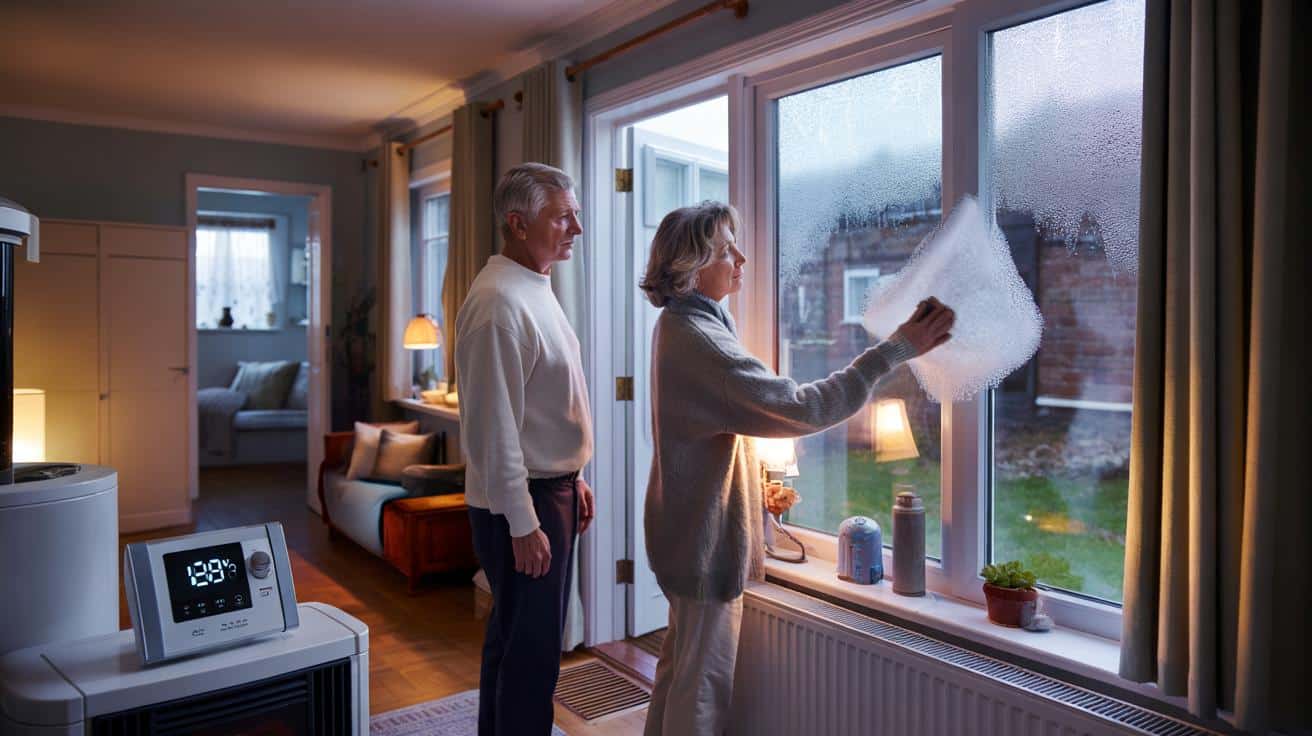
Instead of flashy gadgets or drastic sacrifices, one simple “always-on, briefly-open” routine is helping families feel warmer while trimming gas use by up to a fifth.
The old-fashioned routine that suddenly looks genius
The method sounds like something out of a 1950s housekeeping guide: keep the heating gently ticking over, and throw the windows open twice a day. No shivering in jumpers, no roasting evenings followed by icy mornings, just calm, consistent warmth.
The twist is that this isn’t just folk wisdom. It lines up neatly with what building scientists say about moisture, condensation and how homes actually lose heat.
Hold your heating at around 19–20°C all day, then air the home for 10 minutes twice daily with a strong cross-breeze.
By keeping temperatures stable and attacking damp, many households are reporting fewer draughty chills, less mould – and energy bills that drop by around 15–20% compared with “on for a blast” heating habits.
How the constant-heat trick really works
Why dry air feels warmer
Warm, damp air clings to cold glass, tiles and external walls as condensation. Those wet surfaces act like cold sponges, sucking heat out of the room. Your boiler then has to work harder to keep up.
When you keep the home at a steady 19–20°C and regularly flush out moist air, surfaces stay drier and above the temperature where condensation forms. That reduces the hidden heat loss that comes from constantly reheating cold, damp walls.
Target 40–60% relative humidity indoors. Below that range, rooms feel comfortably warm at lower temperatures and mould struggles to grow.
Instead of sharp peaks when the heating comes on and troughs when it switches off, your boiler runs more gently and efficiently, especially if it’s a modern condensing model.
➡️ Why some people feel anxious when everything seems to be going well
➡️ 3.2 billion years ago, an asteroid twice the size of Paris plunged Earth into chaos
➡️ How a single bedroom houseplant can increase deep sleep phases by 37%, according to a new nasa study
➡️ The psychology behind emotional burnout without obvious causes
➡️ How structuring the day around habits improves efficiency
➡️ For the first time, an entire nation is preparing to be evacuated because of global warming
➡️ As it drifts away from Earth, the Moon is quietly stretching our days and softening our tides
From yo-yo heating to steady comfort
Many people still use their heating like an old gas fire: off most of the day, then fully on for a few intense hours in the morning and evening. That pattern lets walls, floors and furniture cool down deeply.
When the system restarts, the boiler has to pour out energy to warm every solid surface again, not just the air. That sudden push costs money and can leave rooms feeling oddly chilly, even when the thermostat claims they are “up to temperature”.
With the grandma-style approach, you heat the building itself and keep it there. The air you briefly let out during airing is cool again within minutes because the structure is already warm.
The routine: what a typical day looks like
Here is how the habit plays out in a standard British semi or terrace:
| Time | What people do |
|---|---|
| Morning (around 07:30) | Check thermostat is at 19–20°C, wipe any light window mist with a cloth |
| Late morning (around 09:00) | Open two opposite windows for 10 minutes to blast out overnight moisture |
| Late afternoon (around 16:00) | Repeat a 10-minute cross-breeze before the evening at-home peak |
| Night (around 22:00) | Close internal doors, check draught excluders, keep bedrooms at or just below 19°C |
During the day, radiators keep ticking at low intensity, never letting rooms plunge into that bone-deep chill that makes you crank the thermostat up to 22°C “just to feel human”.
Setting your home up for the trick
You do not need a full retrofit or fancy tech to try this. You need decent controls and a few cheap add-ons:
- A working room thermostat and thermostatic radiator valves (TRVs)
- Two or three thick wool throws to soften cold spots around windows
- Draught excluders for external doors and unused rooms
- An indoor thermometer and, ideally, a cheap humidity meter
- A microfibre cloth to wipe stubborn condensation on frosty mornings
Most of these cost less than a takeaway. A basic humidity meter can be found for under £10 and gives instant feedback on whether your airing routine is doing its job.
Watch the humidity meter: if readings sit above 60%, you’re effectively heating damp air and cold walls, not just your living space.
Practical steps: from thermostat to windows
Lock in a target temperature
Set your main thermostat to 19–20°C and resist the urge to fiddle constantly. In rarely used spare rooms, turn TRVs down to around 16–17°C, which protects against condensation without wasting heat.
Steer warmth past cold glass
Position thick throws or heavy curtains near big windows, leaving a gap for air to move between fabric and glass. The idea is to guide warm air across the glass, not to smother the radiator.
This gentle “baffle” effect reduces misting and that icy downdraught from large panes without blocking heat into the room.
Block the worst draughts, not all airflow
Fit draught excluders to front and back doors, and around letterboxes. Keep internal doors closed when heating, then selectively open them during airing so air sweeps cleanly from one window to another.
Vent with intent, not all day
A common fear is that opening windows wastes heat. The trick is speed. Ten minutes of a brisk cross-breeze swaps stale, damp air for fresh, dry air while your walls and furniture stay warm. Leave a window on the latch for hours and you really are heating the street.
Does it really save £150 – or more?
A typical British gas-heated home uses about 12,000 kWh of gas a year, most of that for space heating. If a constant-heat routine trims just 15–20% from the heating part, the reduction can reach 1,500–2,000 kWh a year.
On tariffs around 7p per kWh, that sits in the £105–£140 range. In draughty, condensation-heavy homes switching from “blast and freeze” habits, people are reporting savings closer to or above £150 once routines bed in.
The biggest gains tend to come in homes that previously had steamy windows, musty back rooms and heating set to short, intense bursts.
Beyond the numbers, there is a quieter win: less mould, fewer peeling corners behind cupboards, and far fewer mornings spent scraping water from inside panes.
What households say after two weeks
- Windows stay clear except during harsh cold snaps
- Rooms feel evenly warm, without the “hot lounge, freezing hallway” contrast
- Less damp behind wardrobes and beds pushed against external walls
- Boilers cycle less often and run more quietly
Some describe it as the difference between “chasing heat” and “living in a warm shell”. You stop fighting the house and start working with how it stores and releases warmth.
Common mistakes and safety checks
This method is gentle, but it comes with a few basic rules:
- Never cover electric heaters, gas fires or fan heaters with fabric
- Keep a gap if you hang throws near radiators so air can still circulate
- Avoid airing during thick smog or heavy smoke; shift the airing slot instead
- Pull large furniture 5–10 cm away from external walls to prevent damp patches
- If anyone has asthma or a lung condition, aim towards 50% humidity and clean window seals regularly
Why condensing boilers love steady heat
Modern condensing boilers are most efficient when running steadily with lower flow temperatures. That describes the grandma trick perfectly.
If your radiators still reach 19–20°C, dropping the boiler flow temperature to around 55–60°C can nudge efficiency up again. Water returns to the boiler cooler, letting it condense more water vapour from the flue gases and reclaim extra heat.
Gently warmed radiators working for longer periods often cost less than scorching-hot rads that cut in and out all day.
Three simple tweaks if you try this week
- Set the thermostat to 19–20°C and leave it there for a full week
- Open opposite windows for 10 minutes around 09:00 and again around 16:00
- Install draught excluders and move big wardrobes slightly away from cold external walls
Extra context: condensation, dew point and comfort
When warm indoor air hits a cold surface, it cools and can no longer hold the same amount of moisture. That moisture then appears as droplets. The temperature at which this happens is called the “dew point”.
By keeping your walls and glass from dropping below that dew point, and regularly swapping humid air for drier air, you push your home into a zone where condensation either never forms or clears quickly. Less moisture on surfaces means less heat lost through evaporation, which is one reason rooms feel warmer at the same thermostat setting.
Scenarios: how much difference can it make?
Take two neighbours in identical houses:
- House A heats to 22°C from 06:30–08:30 and 17:00–22:30, then lets the house fall to 15°C overnight, with little ventilation.
- House B keeps 19.5°C all day and night, airs twice for 10 minutes and controls humidity around 50%.
House A’s walls swing through a 7°C range, sucking in moisture overnight and during cooking. House B’s walls drift only slightly and stay dry. Over a season, House B often wins on both comfort and cost, even though the heating technically runs for more hours.
For renters or anyone unable to insulate properly, this routine sits in a useful sweet spot: low cost, reversible, and capable of lifting comfort and cutting bills without drilling a single hole.